
Northwestern University researchers are pioneers in studying underground climate change, dubbed a “silent hazard”, which drives gradual subsidence across Chicago. This article explains its causes, infrastructure risks, and actionable steps for youth to mitigate this hidden urban crisis.
Imagine walking through Chicago’s iconic Loop, grabbing coffee between classes or exploring the city’s skyline—without realizing the ground beneath your feet is slowly, silently shifting. Thanks to groundbreaking research from Northwestern University, we now know this hidden phenomenon, called underground climate change, is reshaping the city from below, and it’s been labeled a “silent hazard” for good reason.
The Pioneering Northwestern Study: Uncovering the Hidden Crisis
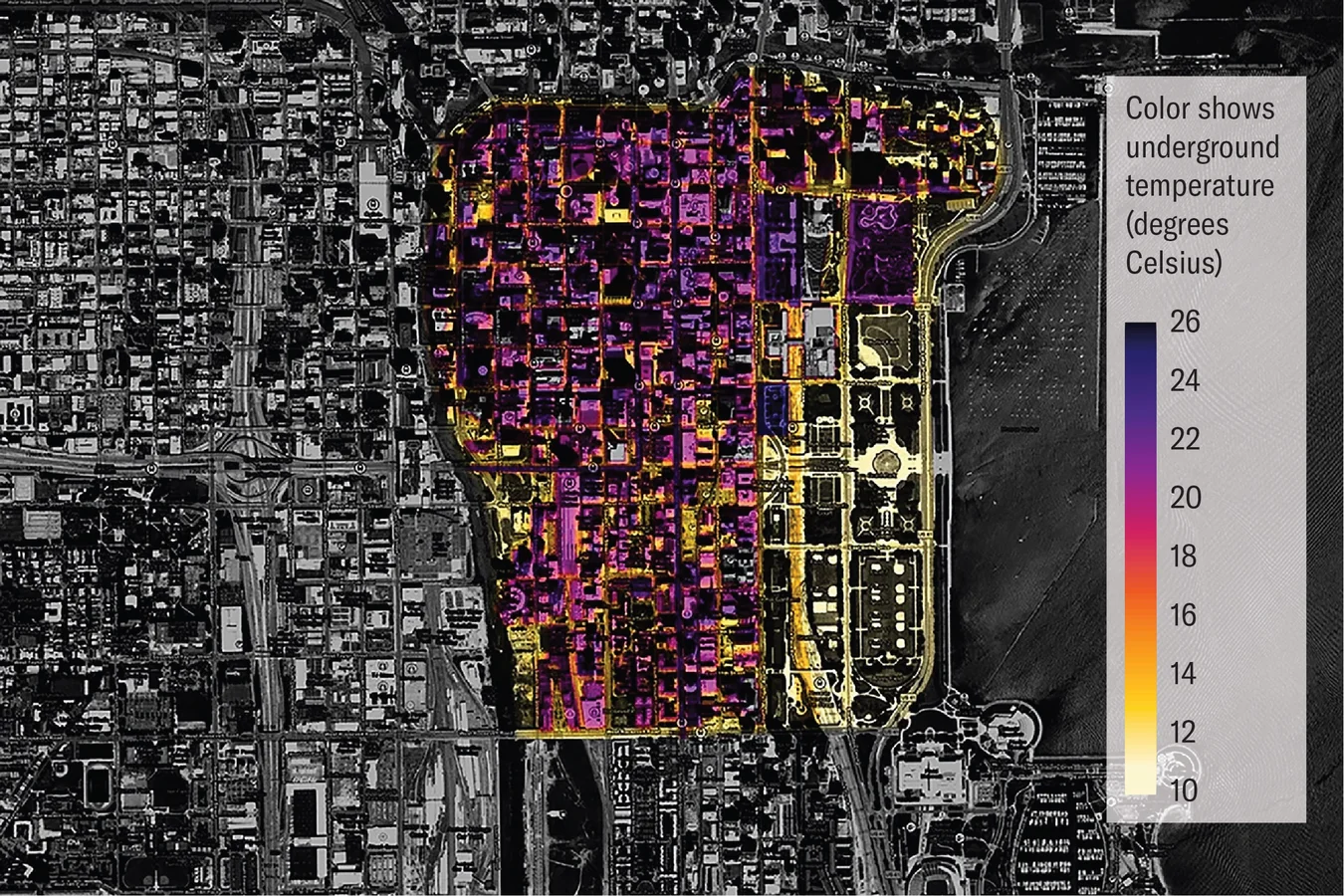
Led by Dr. Alessandro Rotta Loria, an assistant professor of civil and environmental engineering at Northwestern, the research team was the first in the world to link underground climate change (also called subsurface heat islands) to ground deformation and subsidence in urban areasNorthwestern. To map the scale of the issue in Chicago, the team installed a wireless network of more than 150 temperature sensors across the Loop—downtown Chicago’s dense urban core—placing them in subway tunnels, parking garages, building basements, and even Grant Park for a natural, undisturbed comparison.
What they found was staggering. The natural, undisturbed ground temperature in Chicago is around 52°F (11°C). But in the heart of the Loop, underground temperatures have climbed as high as 70°F (21°C), with some underground structures hitting 97°F (36°C)—up to 27°F warmer than the natural baseline. Since the 1950s, when the Loop’s subway system was completed, underground temperatures have risen by roughly 0.25°F every year, part of a global trend where the shallow subsurface beneath cities warms 0.1 to 2.5°C per decade.
Why Warm Underground Air Makes Chicago Sink
The link between rising underground temperatures and subsidence comes down to Chicago’s unique geology. Beneath the city lies a thick layer of soft, clay-rich soil. When this clay is exposed to sustained, unnatural heat, it dries out, contracts, and shifts—permanently deforming the ground beneath buildings and infrastructure.
The team’s 3D computer models revealed the dramatic impact of this deformation: warmer temperatures can cause the ground to swell upward by as much as 12 millimeters in some locations, and contract and sink by up to 8 millimeters in others. While these movements may sound small, they are more than enough to crack building foundations, warp structural supports, and damage critical infrastructure like subway tracks, water mains, and sewers over time.
“Underground climate change is a silent hazard,” Dr. Rotta Loria explains. “The ground is deforming as a result of temperature variations, and no existing civil structure or infrastructure is designed to withstand these variations. In other words, you don’t need to live in Venice to live in a city that is sinking — even if the causes for such phenomena are completely different”Northwestern. This isn’t just a future risk: the research suggests past structural damage to Chicago buildings may have already been caused by this phenomenon, and the problem will only worsen as underground temperatures keep risingNorthwestern.
Who Is Most at Risk?
The areas facing the highest risk of subsidence and infrastructure damage include the Loop, River North, the West Loop, the South Loop, and neighborhoods along Chicago’s major train routes. For young people living, studying, or working in these areas—whether at Northwestern, the University of Chicago, DePaul, or other local schools—this isn’t just an abstract engineering problem. It’s a threat to the safety of the dorms, apartments, offices, and transit systems we use every day. The latent nature of the risk means infrastructure can be silently compromised for decades, with damage only becoming visible when it is severe or even catastrophic.
How We Can Fix It: Solutions & Action
The good news is this silent hazard isn’t unstoppable. The Northwestern team’s research doesn’t just highlight the problem—it also points to actionable, win-win solutions that turn a risk into an opportunity. For the city of Chicago, the most impactful fixes start with simple, low-cost changes: adding thermal insulation to the walls of basements, subway tunnels, and underground parking garages to stop waste heat from seeping into the soil. Even better, that trapped waste heat can be captured and reused to warm buildings, creating a circular, zero-emission heating source for the cityNorthwestern.
As young people, we have a critical role to play in addressing Chicago’s subsidence crisis—even if we’re not civil engineers. Here are tangible, meaningful steps you can take right now:
- Raise awareness in your community: Most Chicagoans have never heard of underground climate change. Share what you’ve learned with friends, classmates, and social media followers to demystify this hidden hazard. The more people know, the more pressure city leaders will face to act.
- Push for change on campus: If you’re a student at a Chicago-area college, advocate for your university to audit and insulate its underground facilities—parking garages, basement labs, and utility tunnels. Campus buildings are major sources of underground heat waste, and insulating them cuts carbon emissions while reducing subsidence risk.
- Support green urban planning: Back local initiatives that expand green spaces across Chicago. The Northwestern team’s research found areas like Grant Park had far cooler underground temperatures than dense, built-up parts of the Loop. Trees, rain gardens, and green roofs cool the surface and reduce heat seepage into the subsurface.
- Advocate for transparency: Call on Chicago’s city council to require regular, public structural assessments of buildings and transit systems in high-risk areas. Transparency about subsidence-related damage is the first step to fixing problems before they become catastrophic.
Underground climate change is a silent hazard, but it doesn’t have to be an invisible one. Thanks to Northwestern University’s pioneering research, we know what’s happening beneath Chicago’s streets, why it matters, and how to fix it. For young people in Chicago and beyond, this crisis is a chance to lead: to turn a hidden urban threat into an opportunity to build greener, safer, more resilient cities for generations to come.
References: Rotta Loria, A. F. (2023). The silent impact of underground climate change on civil infrastructure. Communications Engineering, Nature Portfolio.


Leave a Reply