
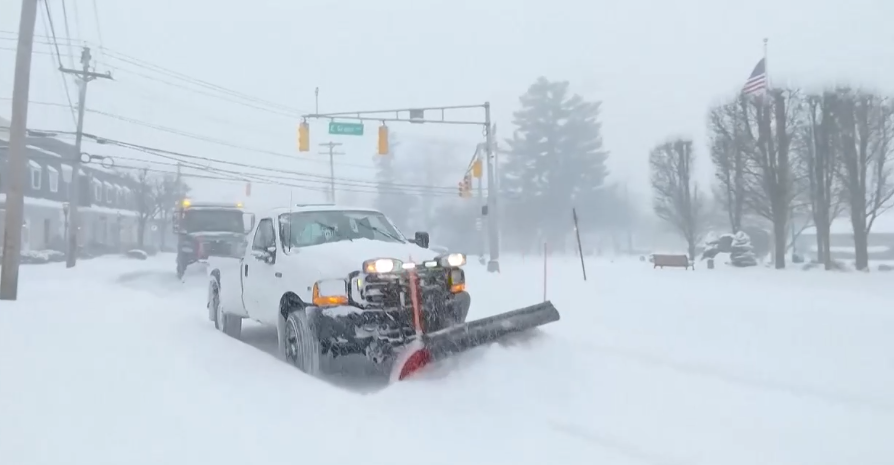
Imagine a weather event spanning over 3,000 kilometers—affecting more people than Germany’s entire population. In late January 2026, this wasn’t a Hollywood blockbuster scene, but a harsh reality across the United States. Unofficially named “Fern,” the epic winter storm brought the nation to a grinding halt, born from a rare “orthogonal collision” between Arctic frost and a Pacific “atmospheric river”—a once-in-a-generation clash of nature’s forces that unleashed unbridled fury.
A Nation Frozen in Its Tracks
By the numbers, Storm Fern’s impact was staggering, disrupting daily life from Texas to New York and leaving chaos in its wake. The most visible turmoil unfolded in travel and daily sustenance, while extreme cold pushed human endurance to the limit.
Travel Chaos Takes Flight
Airports morphed into hubs of frustration as flight cancellations skyrocketed. In just a few days, over 13,000 flights were scrubbed, with major hubs like Dallas-Fort Worth and Chicago O’Hare paralyzed—hundreds of flights grounded each day, stranding travelers and upending plans. Roads fared no better, with icy conditions making even short journeys perilous.
A Mad Dash for Essentials
On the ground, panic buying emptied supermarket shelves. Shoppers rushed to stock up on food, water, and daily necessities, while hardware stores sold out of snow shovels, ice melt, and portable heaters. For many, it was a desperate race against the impending deep freeze, turning routine errands into urgent missions.
Bone-Chilling Cold Beyond Comprehension
The storm’s cold was relentless and extreme. In northern states like Minnesota and North Dakota, wind chills plummeted to a numbing -45°C to -50°C—cold enough to freeze exposed skin in minutes. Further south, where such frigid temperatures are unheard of, states like Texas braced for sub-zero conditions, catching communities off guard.
The Science: What Is an “Orthogonal Collision”?
Meteorologists attribute Storm Fern’s ferocity to a rare phenomenon: an orthogonal collision. Unlike a head-on crash, this is a dramatic “T-bone” clash between two colossal atmospheric systems, each fueling the storm’s power.
- The Arctic “Ice Brigade”: A massive, dense mass of frigid air surging south from the Arctic, carrying bone-chilling temperatures that lock everything in its path.
- The Pacific “Water Vapor Highway”: A warm, moisture-laden “atmospheric river” flowing east from the Pacific Ocean, packed with the fuel for heavy precipitation.
When these two forces collided at a 90-degree angle over central America, atmospheric dynamics kicked into high gear. The clash created a powerful upward current, lifting warm, wet air rapidly. As the air rose, water vapor condensed and froze, forming heavy snow and freezing rain before cascading down. This mechanism supercharged the storm, unleashing intense snowfall, thick ice, and fierce winds all at once.
For the southern U.S., this spelled catastrophe: forecasts warned of up to 5 cm of ice accumulation in some areas—enough to snap power lines, crack tree limbs, and cripple critical infrastructure.
Beyond the Headlines: Climate Change and Preparedness
Storm Fern isn’t just a one-off disaster—it’s a wake-up call that forces us to confront bigger questions. While extreme cold may seem contradictory to global warming, scientists warn that a warming Arctic could be the hidden driver. As the polar vortex—a stable pool of cold air circling the North Pole—weakens, it’s more likely to send frigid air surging into mid-latitudes, making such storms more frequent.
The storm also laid bare critical vulnerabilities, especially in regions unaccustomed to severe cold. In Texas, memories of the 2021 grid collapse loomed large, sparking fears of a repeat disaster. It’s a global lesson: infrastructure built for milder climates can’t withstand the new normal of extreme weather.
Authorities stepped up with urgent guidance: FEMA, along with consulates like China’s in Chicago, advised people to avoid non-essential travel, stock emergency kits with food and water, insulate pipes to prevent freezing, and learn to recognize frostbite and hypothermia symptoms.
A Chilling Preview of the Future
Storm Fern was more than a bad snowstorm—it was a complex meteorological event that rippled through every corner of society. It exposed how interconnected and fragile our modern systems—transport, energy, supply chains—are when pitted against nature’s might.
As climate patterns shift, understanding the science behind extreme weather and building resilience isn’t just a priority—it’s essential. The great freeze of 2026 is a stark reminder: our changing climate is bringing unprecedented challenges, and we must adapt to protect our communities and way of life.


Leave a Reply